
Views: 3 Author: FUDA block machine factory Publish Time: 2026-04-21 Origin: Site
The right auto brick making machine isn't just a piece of equipment; it's the beating heart of your manufacturing business. This single investment dictates your daily output, product quality, and ultimately, your long-term profitability. Choose wisely, and you unlock a future of efficiency and growth. Choose poorly, and you may face endless downtime, subpar bricks, and crippling repair costs.
The market is a labyrinth of options—from semi-automatic to fully integrated plants, with varying technologies, capacities, and price tags. It’s easy to feel overwhelmed. This guide is designed to cut through that confusion. We will walk you through the critical technical, operational, and financial factors that seasoned plant operators and industry engineers consider.
Our purpose is to empower you to make an informed, confident investment. The recommendations here are based on industry standards, technical specifications, and long-term operational viability, not sales pitches. Let’s begin by turning inward, to the foundation of any good decision: your own needs.
Before you look at a single machine brochure, you must have absolute clarity on two things: how much you need to produce, and what you will be producing it from. This practical, foundational step is where many successful investments are born.
Your production target is the primary driver for machine size and automation level. It’s a numbers game.
How to Calculate Required Output: Start with your sales forecast or market demand. How many bricks do you need to sell per day?
Bricks per Hour: A machine’s capacity is often listed as "bricks per hour" (BPH). Calculate your needed BPH by dividing your daily target by your intended operational hours per day.
Factor in Efficiency: No machine runs at 100% capacity all day. Account for mold changes, maintenance breaks, and material loading. A safe estimate is to assume 80-85% of the stated maximum capacity for realistic planning.
Scale Definitions:
Small-Scale: Up to 10,000 bricks per day. Often served by robust semi-automatic machines.
Medium-Scale: 10,000 to 40,000 bricks per day. This is the sweet spot for standard fully automatic machines.
Large-Scale: 40,000+ bricks per day. Requires heavy-duty, high-speed automatic lines, often with multiple production streams.
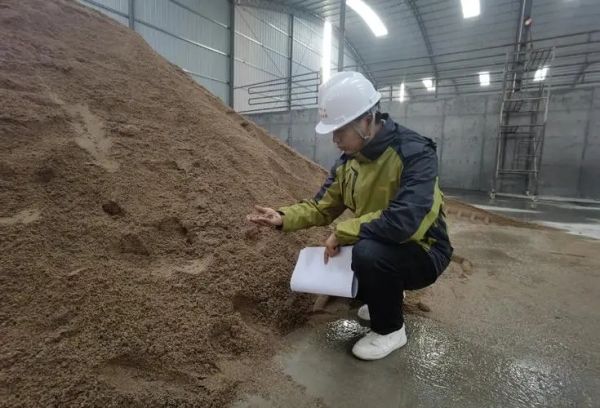
The machine must be compatible with your clay or soil. Forcing the wrong material through a machine is a recipe for blockages, poor quality, and accelerated wear.
Types of Soil/Clay: Sandy soil, loam, and shale all behave differently. Some machines handle a wide range, while others are optimized for specific plasticity levels.
Key Properties:
Moisture Content: This is critical. Too wet, and bricks slump. Too dry, and they won’t compact properly. Your machine’s mixer must be able to achieve and maintain the optimal moisture content (typically 8-12% for clay).
Plasticity: Determines how well the material binds under pressure.
Abrasiveness: Highly abrasive soil will wear out molds and mixer blades much faster, impacting your long-term cost of ownership.
Additive Compatibility: Will you use fly ash, cement, or other stabilizers? Not all machines are designed to mix these additives uniformly. You must confirm the machine’s mixer type (e.g., pan mixer, paddle mixer) is suitable for your intended mix.
Now, with your needs defined, we can explore the types of machines available. The level of automation you choose represents the fundamental trade-off between capital investment and operational labor.
Imagine a synchronized production line. Raw material goes in one end, and finished, stacked bricks emerge from the other with minimal human intervention.
Description: An integrated system that includes an automatic feeder, mixer, conveyor, brick press, and brick stacker/cutter. Often controlled by a Programmable Logic Controller (PLC).
Pros:
Maximum Output: Can produce 15,000 to 30,000+ bricks in an 8-hour shift.
Minimal Labor: Typically requires only 3-5 personnel for supervision, feeding, and maintenance.
Consistent Quality: Automated processes eliminate human variability, ensuring every brick has identical dimensions and density.
Cons:
Highest Investment: Significantly more expensive upfront than semi-automatic models.
Requires Stable Infrastructure: Needs a reliable, high-capacity power supply and a sophisticated foundation.
Complex Maintenance: Requires technically skilled personnel for troubleshooting hydraulic and electrical systems.

This is the workhorse of the industry, offering a balance between automation and manual control.
Description: The core brick-forming process (filling, compression, ejection) is automated. However, tasks like feeding raw material into the hopper and removing green bricks for drying are done manually.
Pros:
Balanced Cost & Output: Lower initial purchase price with a respectable output of 5,000 to 15,000 bricks per shift.
Easier Maintenance: Simpler mechanical and hydraulic systems are easier for in-house staff to understand and repair.
Flexible: Easier to adapt to different material batches or short production runs.
Cons:
Higher Labor Dependency: Requires 6-10 workers per shift, increasing your recurring operational costs.
Lower Ultimate Capacity: Limited by the speed of manual handling steps.
How the machine forms the brick is crucial for strength and quality.
Static Pressure Machines: Use a simple mechanical lever or toggle system to apply pressure. Less common now, they are generally lower cost but produce bricks with lower compressive strength.
Hydraulic Pressure Machines: The industry standard for quality. Use a hydraulic pump and cylinder to apply immense, controllable pressure (measured in tons). This results in high-density, high-strength bricks (often exceeding 10-15 MPa). The pressure can be precisely adjusted for different materials.
Vibratory Compression Machines: Use high-frequency vibration to compact the material, often in combination with some pressure. Excellent for concrete blocks and bricks with large aggregates.
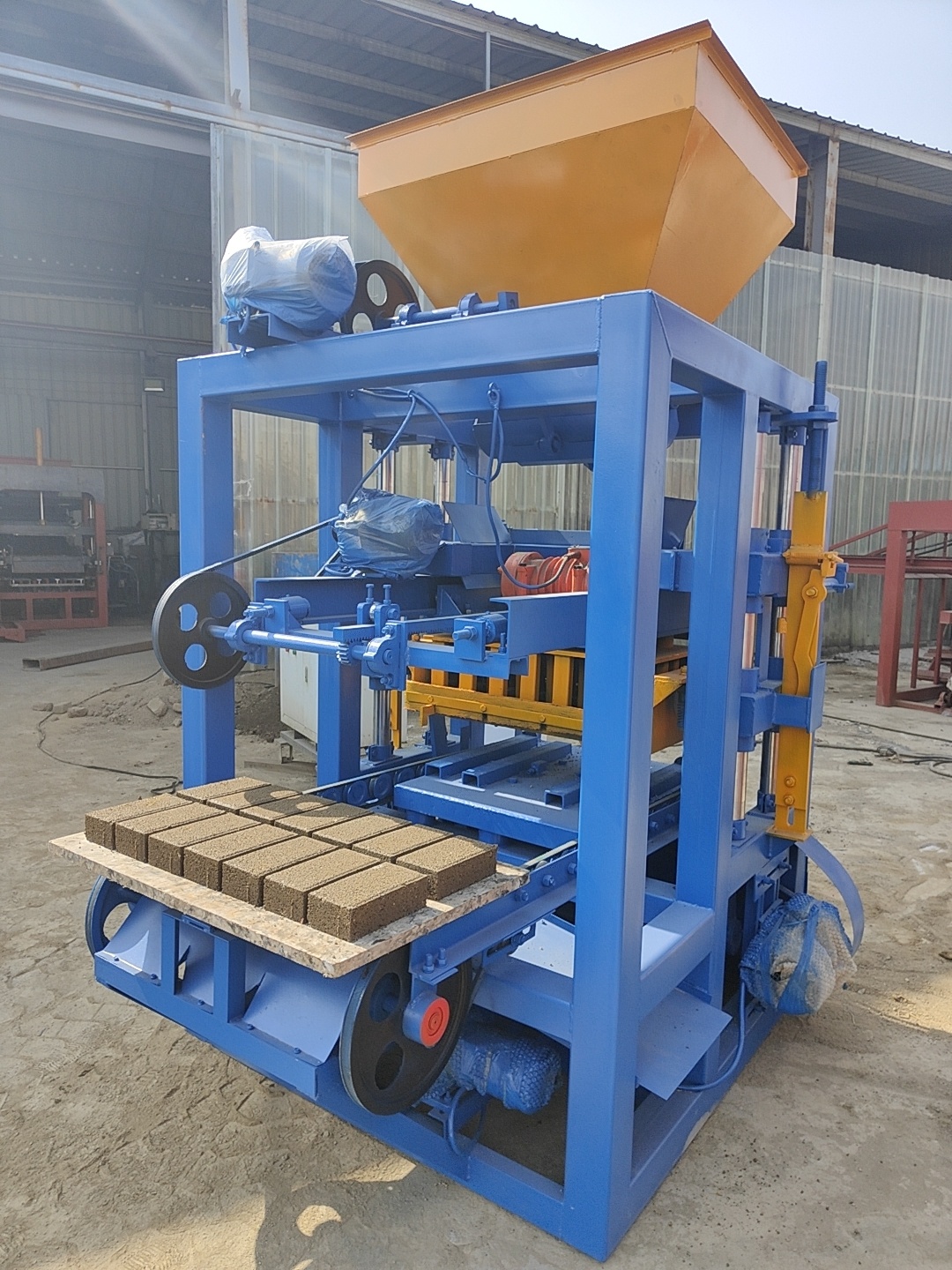
When comparing machines, move beyond marketing claims and dive deep into the technical datasheet. These metrics tell the real story.
Cycle Time: Measured in seconds per brick or strokes per minute. A faster cycle time means higher potential output. Compare this number at the same pressure rating for a fair assessment.
Pressure Capacity (Tons): This directly correlates to brick strength. A 150-ton press will produce a denser, stronger brick than a 60-ton press using the same material. For standard building bricks, look for machines capable of at least 80-100 tons of pressure.
Mold Customization: Your business may need to produce solid, hollow, or interlocking pavers. Ensure the supplier offers quick-change mold systems and that the machine’s feed and ejection systems can handle different brick sizes.
Electrical vs. Diesel: Most stationary plants use electric motors (measured in HP or KW). Diesel engines are an option for areas with unreliable grid power but come with higher fuel costs and maintenance.
Calculating Cost: Don’t just look at the motor power. Ask for the machine’s average energy consumption per hour under load. Multiply this by your local electricity tariff and daily operating hours to forecast a major running cost.
The machine’s construction determines its lifespan.
Frame Construction: Look for heavy-duty, welded steel frames (grade A36 or better). Thin, bolted-together frames will flex and degrade under constant high pressure.
Hydraulic System: This is the system’s heart. Reputable brand-name pumps (e.g., Rexroth, Kawasaki, Yuken) and hardened steel cylinders indicate quality. Ask about the design of the oil reservoir and cooling system.
Wear Parts: Inquire about the material of molds (hardened chromium steel is best), mixing blades, and liners. How long are they expected to last under your specific material? What is their replacement cost?

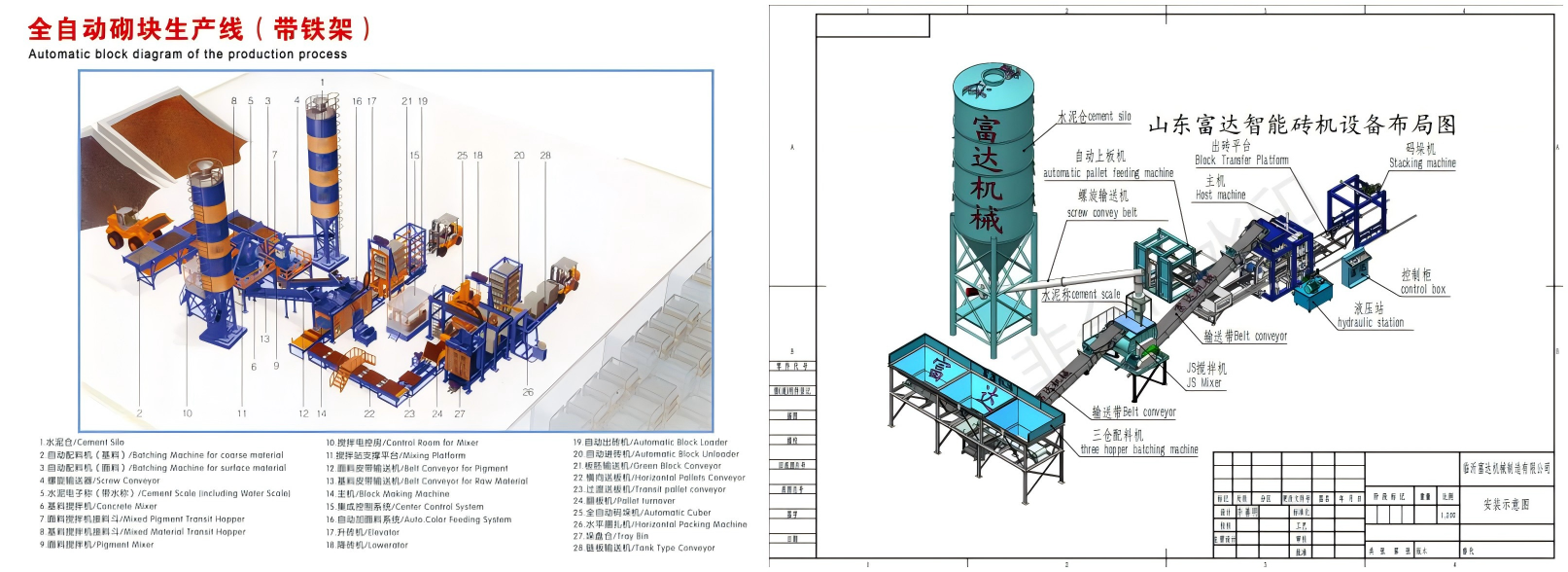
A brick making machine does not operate in a vacuum. It is the centerpiece of an entire production ecosystem.
Mixers: A pan mixer or twin-shaft mixer is essential for achieving a homogeneous, consistent mix. Its capacity should match or exceed your machine’s hourly consumption.
Conveyors: Belt conveyors transport raw material to the mixer and mixed material to the machine hopper, reducing manual labor.
Curing Systems: Green bricks must be dried and cured properly. This requires space for drying racks, or better yet, a controlled curing chamber (which significantly improves strength and reduces cracking).
Total Plant Area: You need space for: 1) The machine and its auxiliary equipment, 2) Raw material storage, 3) Drying/curing area, 4) Finished brick storage. A medium-scale plant often requires 5,000 to 10,000 sq. ft. minimum.
Foundation: This is non-negotiable. A fully automatic machine requires a massive, level, reinforced concrete foundation (often 1-2 feet thick) to absorb vibrations and prevent misalignment. The supplier should provide detailed foundation drawings.
Your relationship with the supplier lasts long after the sale. Their reliability is as important as the machine’s specs.
Track Record: How long have they been manufacturing these specific machines? A 20-year-old company has likely ironed out design flaws.
Evidence: Request a list of client references, preferably in your region. Ask for videos or, ideally, visit an existing working plant to see the machine in action. A credible supplier will facilitate this.
Installation & Training: Does the price include supervision of installation and comprehensive operator training? The absence of this is a major red flag.
Spare Parts: What is the availability and cost of common wear parts? How quickly can they be shipped? A local parts warehouse is a huge advantage.
Warranty: Read the fine print. A standard warranty is 12 months on the machine, but often excludes wear parts (molds, blades). Understand exactly what is covered.
The cheapest machine can become the most expensive asset you own.
Look Beyond the Sticker Price: Factor in:
Shipping, insurance, and import duties.
Installation and foundation costs.
Cost of auxiliary equipment.
Projected costs for energy, labor, and spare parts over 3-5 years.
A slightly more expensive, robust machine from a reputable supplier with low maintenance needs will almost always provide a better return on investment than a bargain-basement model.
Q1: What is the average price range for an automatic brick making machine?
A: Prices vary dramatically based on capacity, automation, and origin. A small semi-automatic machine can start around $5,000 - $11,000. A standard fully automatic line typically ranges from $11,000 to $40,000. Large-scale, high-capacity plants can exceed $50,000. Always get detailed quotations based on your specific required specifications.
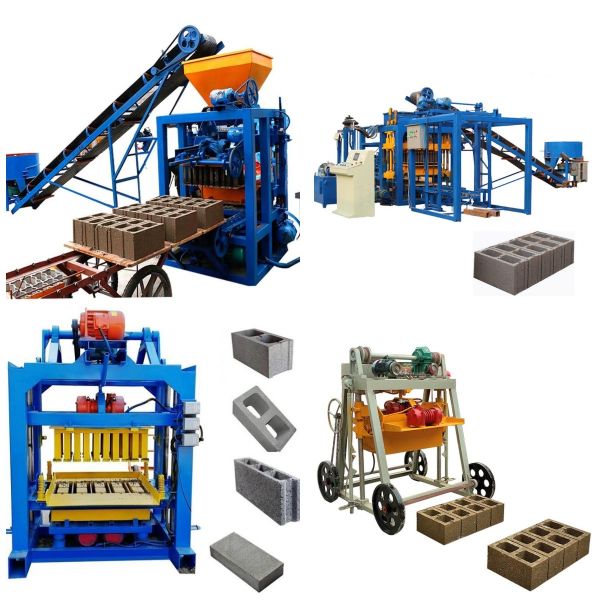
Q2: Can one machine produce different types and sizes of bricks?
A: Yes, this is a key feature. By changing the mold box and, sometimes, minor machine settings, you can produce solid, hollow, or paving bricks. However, inquire about the mold changeover process—how long it takes and the cost of additional mold sets.
Q3: What is the typical payback period for this investment?
A: For a well-run operation with good market demand, the payback period is typically between 1 to 3 years. This depends heavily on your local brick selling price, operational efficiency, and management of production costs.
Q4: How many workers are needed to operate a fully automatic plant?
A: A complete fully automatic plant can be efficiently run by 3-5 workers per shift. Their roles include supervising the control panel, ensuring raw material supply, performing quality checks, and handling stacked bricks for curing.
Q5: What are the most common maintenance issues?
A: The most frequent issues involve wear parts: replacing mold liners, cleaning or replacing mixer blades, and addressing leaks in hydraulic hose fittings. A strict schedule of preventive maintenance—regularly checking oil levels, cleaning sensors, and tightening bolts—is the best way to avoid major, costly breakdowns.
Choosing the right auto brick making machine is a complex but manageable process. It hinges on a clear-eyed assessment of your own production needs and raw materials, followed by a meticulous evaluation of both the machine’s technical specifications and the supplier’s long-term credibility.
Our final advice is to systematize your search. Create a shortlist of 2-3 reputable suppliers. Request detailed quotations from each for an identical set of specifications and output requirements so you can compare fairly. Always insist on seeing a video demonstration of the exact model you’re considering, or better yet, arrange a factory or site visit.
Use this guide as your checklist. For a major investment of this scale, we also recommend consulting with an independent industry expert or civil engineer to review your final plan. The time and diligence you invest in this decision today is the single greatest predictor of your plant’s productivity and profitability for the next decade.

