
Views: 0 Author: FUDA block machine factory Publish Time: 2026-04-15 Origin: Site
A Comprehensive Buyer’s Guide
The foundation of any successful structure is a quality brick. Similarly, the foundation of a successful brick manufacturing business is the right making bricks machine. This single decision can dictate your productivity, define your product quality, and ultimately, determine your profitability for years to come. Choosing incorrectly can lead to costly downtime, inconsistent output, and an endless cycle of repairs.
This guide is built on industry best practices, technical engineering principles, and real-world operational experience. Whether you’re a first-time entrepreneur entering the construction materials sector or an established manufacturer looking to upgrade, this article provides the framework you need.
We understand you’re looking for a clear, step-by-step process to navigate a complex market. You want to make an informed investment, avoid common pitfalls, and select equipment that aligns with your vision. We’ll cut through the noise and provide actionable insights.
Here’s the roadmap we’ll follow: First, we’ll help you lay the groundwork by understanding your own project requirements. Next, we’ll explain the different types of machines available. Then, we’ll dive into the critical technical features you must evaluate. We’ll outline a rigorous process for selecting a reputable supplier and conclude with a clear-eyed look at financials and return on investment (ROI). Let’s begin.

Before you look at a single machine brochure or price quote, you must look inward. The most sophisticated, expensive brick making machine is a terrible investment if it doesn’t match your specific reality. This internal audit is your essential first step.
Your output targets are the primary driver of your machine choice. Be realistic and strategic.
Daily/Annual Output: Quantify your needs.
Small-Scale / Startup: 1,000 to 5,000 bricks per day. Often serves local communities, small contractors, or is a side business.
Medium-Scale / Growing Business: 5,000 to 20,000 bricks per day. Supplies larger construction projects or a steady local market.
Large-Scale Industrial: 20,000+ bricks per day. Requires high-volume, automated production for regional supply or major contracts.
Project Type: Your context matters.
New Startup: Prioritize simplicity, lower capital outlay, and machines easier to learn.
Business Expansion: Focus on increasing efficiency, consistency, and capacity with more advanced technology.
Specific Contract Fulfillment: The machine must meet the exact output and brick specifications required by the contract on a defined timeline.
The machine must be engineered for your raw material, not the other way around. Local availability is key.
Primary Material Type: Common options include:
Clay: Traditional material, requires high pressure or extrusion.
Concrete (Cement + Aggregates): Uses vibration and compression; very common.
Fly Ash: Eco-friendly option, often used with lime or cement.
Compressed Earth/Soil: For stabilized earth blocks (CSEBs), often using manual or semi-automatic presses.
Material Properties: Analyze your source material.
Moisture Content & Plasticity: Affects mix design and the required pressure for compaction.
Hardness & Abrasiveness: Impacts wear and tear on molds and mixing components.
Local Availability & Cost: A machine designed for fly ash is useless if only clay is available locally. Your most abundant and cost-effective material should guide your choice.

Your market dictates your product. Don’t buy a machine that can’t make what you need to sell.
Brick Type:
Solid Bricks: Standard building units.
Hollow Bricks: Lighter, better insulation.
Interlocking Bricks: Reduce mortar use, faster construction.
Paving Blocks & Tiles: For landscaping and hardscaping.
Specialized Shapes: Curved, angled, or custom-designed bricks.
Quality Specifications:
Compressive Strength: A critical metric for structural integrity (e.g., 10MPa, 15MPa, 20MPa+). The machine must achieve this consistently.
Dimensional Accuracy: Bricks must be uniform for efficient bricklaying. Precision in the mold and vibration system is vital.
Surface Finish: Smooth, textured, or rustic? This depends on mold finish and release systems.
Compliance: Ensure the machine can produce bricks that meet local building codes and market standards. This is non-negotiable.
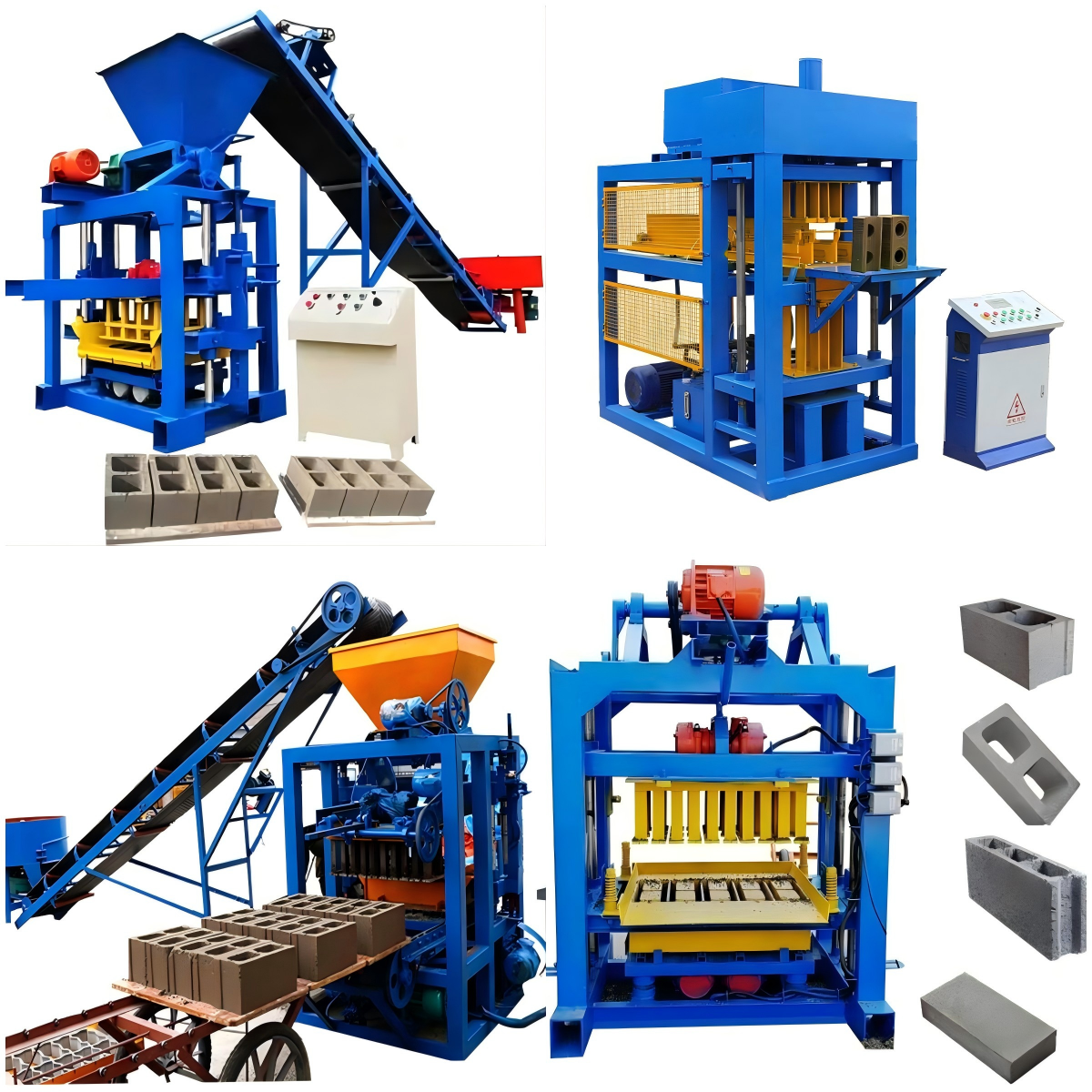
With your requirements clear, you can now explore the categories of machines designed to meet different needs. Here’s a breakdown of the main types.
These are human-powered, lever-operated presses.
Operation & Output: Entirely reliant on operator strength. Output is low, typically a few hundred bricks per day per operator.
Cost: Very low initial investment.
Best For: Ultra low-budget startups, community-led projects, NGOs in remote areas, or producing specialty low-volume products. They are a starting point, not a scaling solution.
This category offers a balance, automating the most labor-intensive part—compression.
Operation: Operators manually feed material into the mold, but a hydraulic system or mechanical press provides the forming pressure. Bricks are often ejected manually.
Best For: Small to medium businesses ready to improve quality and output over manual methods without the full cost and complexity of automation. They offer a good middle ground in efficiency and investment.
These are complete production lines with minimal human intervention.
Operation: Integrated systems automatically handle feeding (of raw mix), precise mixing, molding, high-pressure compaction, and stacking/palletizing of green bricks.
Best For: Large-scale production where consistent, high-quality output is paramount. They significantly reduce direct labor costs and human error, offering the highest productivity. The investment is substantial.
This is a crucial strategic choice related to your operational model.
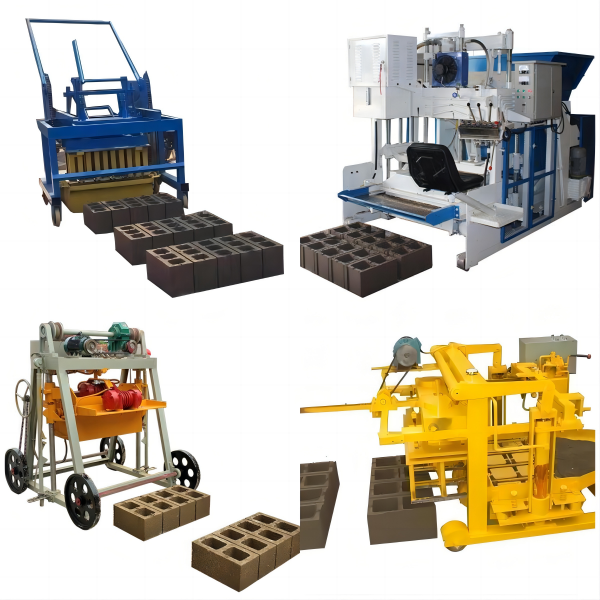
Mobile Brick Plants: Mounted on a trailer for easy transport.
Advantage: Produce bricks directly on a large construction site, eliminating transport costs for finished goods. Ideal for infrastructure projects (dams, roads, remote housing).
Stationary Brick Plants: Installed in a fixed factory location.
Advantage: Designed for optimized, high-volume output. Allows for permanent infrastructure like covered curing areas, large raw material stockpiles, and efficient workflow. The standard choice for supplying a market.
Now, drill down into the specifics. Two machines may both be “semi-automatic,” but their performance and lifespan can differ drastically based on these features.
This is the heart of the machine. How it forms the brick is fundamental.
Hydraulic Pressure vs. Vibration Compression:
Hydraulic: Uses immense, controlled fluid pressure to compact the material. Excellent for producing high-strength, dense bricks from concrete and certain clays. Offers precise control over pressure and dwell time.
Vibration: Uses high-frequency vibration to settle the concrete mix into the mold, often combined with some pressure. Very effective for concrete hollow blocks and paving stones. Can be faster for some applications.
Many modern machines combine both for optimal results.
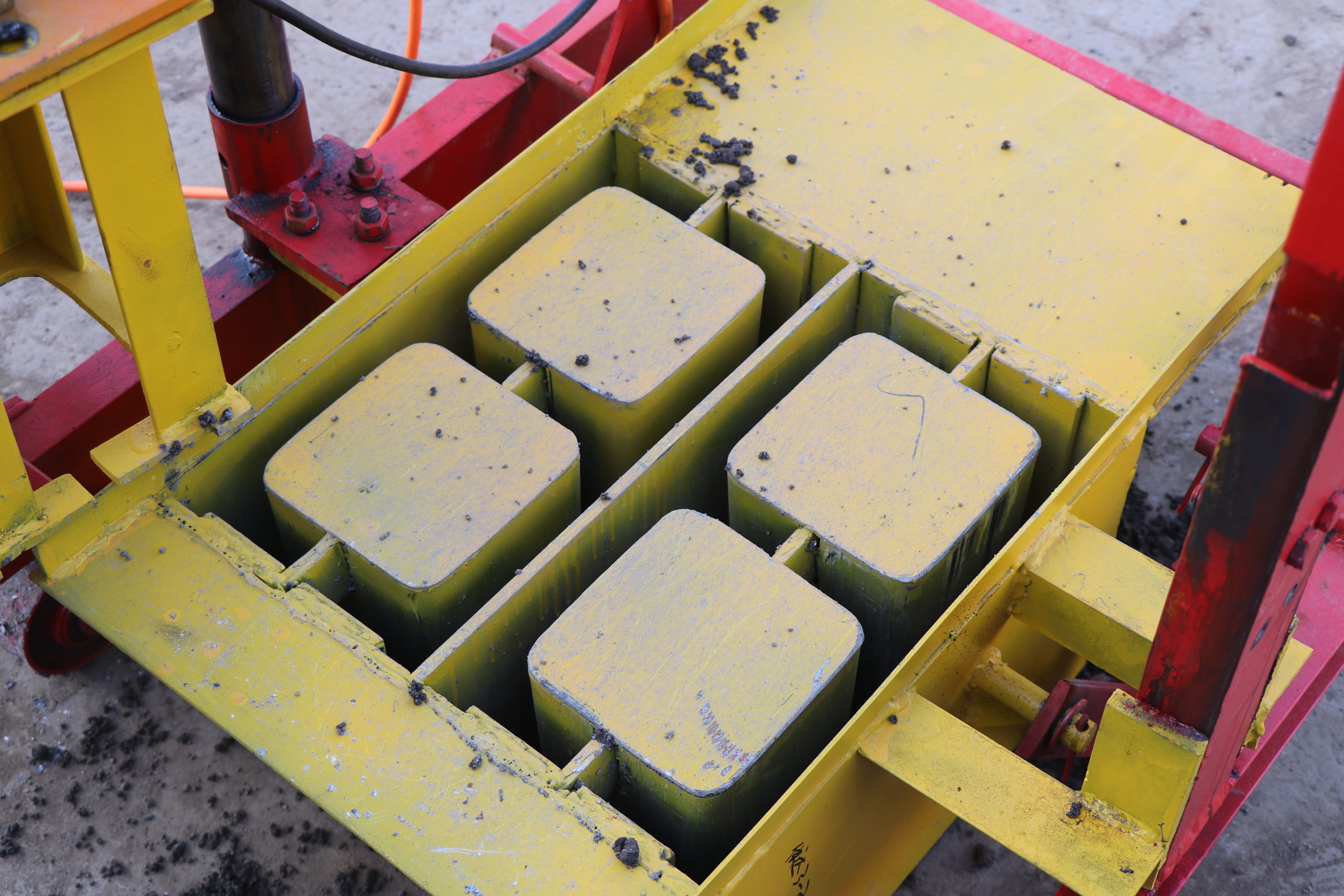
Mold Quality: This is a wear part that defines your brick’s shape.
Material: Must be high-chrome, hardened steel for longevity.
Interchangeability: Can you easily swap molds to produce different brick types? This adds tremendous flexibility to your business.
Your local utilities and operational costs are deciding factors.
Source Options:
Electric: Clean, quiet, and efficient where grid power is stable and affordable.
Diesel: Essential for sites with no reliable electricity. Higher fuel costs and maintenance.
Hybrid (Electric/Diesel): Offers flexibility but at a higher initial cost.
Operational Cost Analysis: Calculate the cost per brick based on your local electricity tariff or diesel price. A slightly more expensive but energy-efficient machine can save thousands over its lifetime.
This governs consistency and ease of use.
PLC (Programmable Logic Controller) Systems: The brain of automatic machines.
Precision: Allows exact programming of cycle times, pressure, vibration duration, etc., ensuring every brick is identical.
Diagnostics: Modern PLCs can alert operators to faults, simplifying troubleshooting.
Ease of Use: Look for an intuitive human-machine interface (HMI) touchscreen, not a confusing panel of buttons.
This determines your machine’s lifespan and uptime.
Frame Construction: Look for robust, welded steel frames made from thick plate. A flimsy frame will flex under load, causing misalignment and wear.
Component Quality: Brand names matter for critical parts.
Hydraulic System: Reputable brand pumps, valves, and cylinders (e.g., Bosch Rexroth, Parker) leak less and last longer.
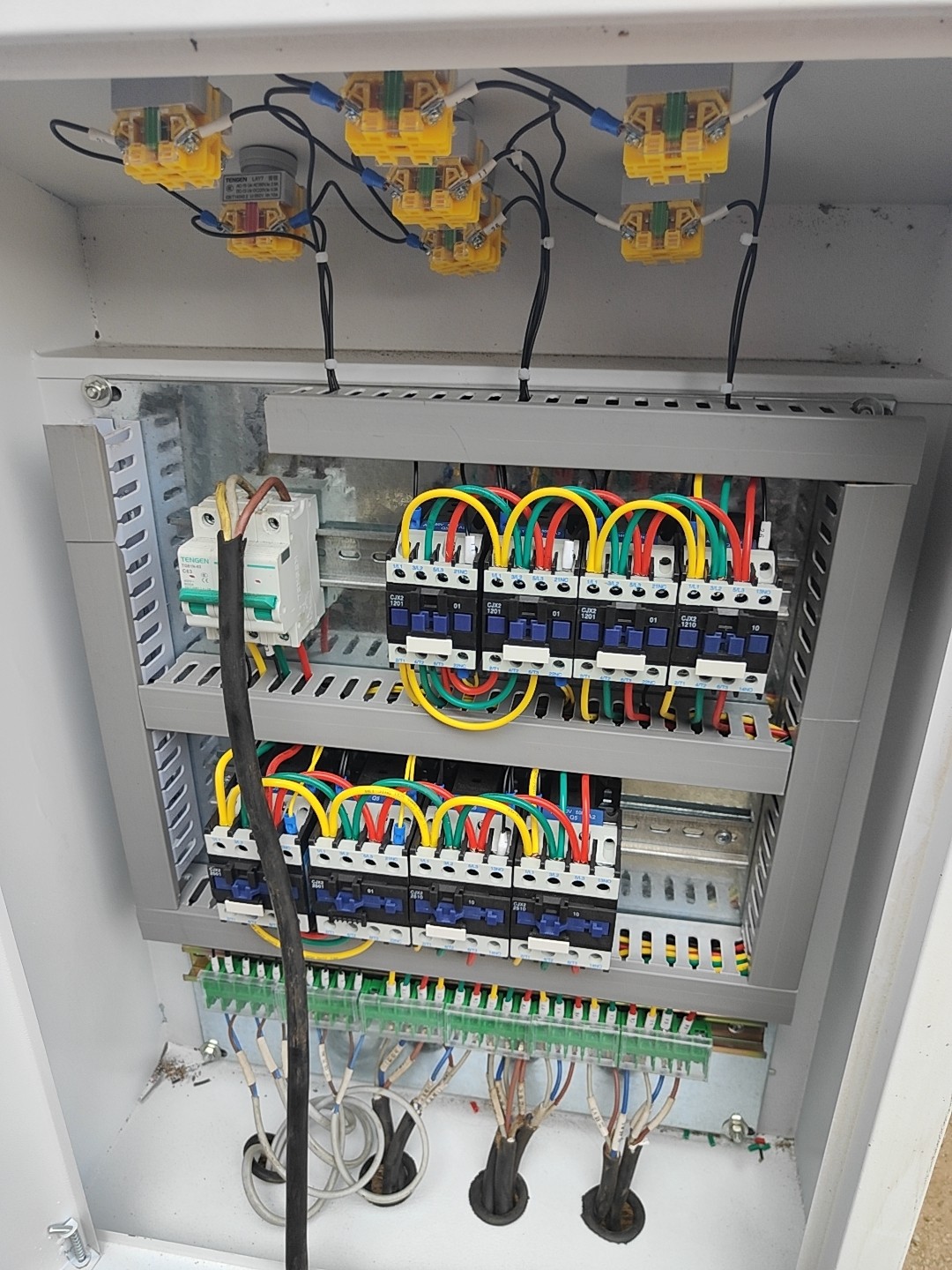
Electrical Components: Quality motors, switches, and PLCs (e.g., Siemens, Allen-Bradley) ensure reliability.
Weather Resistance: If operating outdoors, check for corrosion-resistant paint and protected electrical panels.
The best technical specifications are worthless if the company behind them is unreliable. Vetting the supplier is as important as vetting the machine.
Look beyond the sales pitch to the company’s substance.
Track Record: How long have they been in business? A decade of experience suggests stability and accumulated knowledge.
Certifications: Do they have ISO certifications? Do they hold patents for their technology? These indicate a commitment to quality and innovation.
Specialization: Do they focus on brick making machinery, or is it just one of hundreds of products? Specialists typically offer better support.
This is where many buyers face their biggest challenges. Clarify this upfront.
Service Package: What is included?
Installation & Commissioning: Will they send an engineer to set up the machine and ensure it runs correctly?
Operator Training: Comprehensive training is essential for productivity and safety.
Manuals: Are detailed operation and maintenance manuals provided in your language?
Warranty: Scrutinize the terms. What is covered (parts, labor)? For how long? What voids the warranty?
Spare Parts: How quickly can you get critical spare parts? Do they have a local distributor or warehouse? A machine waiting for a part shipped from overseas is a money-losing asset.
Seek independent verification.
Genuine Testimonials: Ask the supplier for contact information of previous customers in your region or with a similar setup. Speak to them directly about performance and support.
The Ultimate Test – A Site Visit: If feasible, visit a working plant that uses the machine you’re considering. See it run, hear the noise, talk to the operators. If a visit isn’t possible, insist on detailed, unedited video demonstrations of the machine in operation, not just a promotional clip.

Shift your mindset from “purchase price” to “total cost of ownership” and “investment return.”
The sticker price is just the beginning.
Initial Costs: Machine price, shipping, insurance, import duties, installation, and foundation work.
Long-Term Operational Costs:
Maintenance: Regular servicing, oil changes, filter replacements.
Spare Parts: Budget for wear parts like molds, liners, and seals.
Energy/Fuel: Your ongoing power costs.
Labor: Wages for operators, even for automated lines.
Create a simple, conservative financial model.
Estimate Daily Production Capacity (based on machine specs).
Determine Your Local Selling Price per brick.
Calculate Daily Revenue (Capacity x Selling Price).
Subtract Daily Operational Costs (Raw materials + energy + labor + maintenance amortization).
Estimate Your Gross Daily Profit.
Calculate Payback Period: (Total Machine Investment Cost) / (Gross Daily Profit). This gives you the number of production days needed to recoup your investment.
Plan for the acquisition process.
Financing Options: Does the supplier offer financing or leasing plans? Can you secure local equipment financing? This can preserve working capital.
Logistics: For international purchases, who handles freight and customs clearance (Incoterms like FOB, CIF)? Understand all these costs and responsibilities before committing.
Q1: What is the average cost range for a brick making machine?
A: Prices vary enormously based on type and capacity. Manual presses can cost $1,000 – $5,000. Semi-automatic machines range from $10,000 – $50,000. Fully automatic production lines start around $50,000 and can exceed $300,000+ for large, high-capacity plants. Always link cost to output and features.
Q2: Can one machine produce different types and sizes of bricks?
A: Yes, through interchangeable molds. A versatile machine can produce solid, hollow, and interlocking bricks by swapping the mold box. However, each change requires downtime (30 mins to a few hours), so it’s best for batch production, not constant switching.
Q3: How much space is required to install and operate a brick making plant?
A: Space needs extend far beyond the machine. A small semi-automatic setup might need 500-1,000 sq. ft. for the machine and immediate work area. A full plant with raw material storage, production line, curing yard, and finished goods storage can easily require 10,000 – 50,000 sq. ft. or more.
Q4: What are the most common maintenance issues and how can I prevent them?
A: Common issues include hydraulic oil leaks, worn mold liners, loose bolts/vibrations, and electrical connection faults. Prevention is key: follow a strict preventive maintenance schedule (daily checks, weekly lubrication), use clean hydraulic oil, and ensure operators are properly trained. Keeping the machine clean is surprisingly effective.
Q5: How do I choose between a local supplier and an international manufacturer?
A: Weigh the trade-offs. Local Suppliers offer easier communication, faster support, and lower shipping costs but may have limited technology options. International Manufacturers often provide more advanced technology and competitive pricing but pose challenges in time zones, language, and the logistics of support/spare parts. For critical equipment, prioritize proven support channels above all.
Choosing the right brick making machine is a strategic journey, not a simple purchase. It begins with a deep and honest analysis of your own project needs—your materials, your target products, and your scale. This foundation allows you to navigate the landscape of machine types, from manual to fully automatic.
The devil is in the technical details: the molding system, the power source, the build quality. Scrutinize these features with a critical eye. Then, apply even greater rigor to the supplier selection process. A machine is only as good as the company that stands behind it for the next decade.
Finally, run the numbers. Look beyond the price tag to the total cost of ownership and build a realistic ROI model. Remember, this is a capital investment in the future of your business. Prioritizing long-term reliability, consistent quality, and unwavering supplier support will always yield a better return than opting for the lowest initial price.
Your Next Step: Use this guide to create a detailed Project Specification Sheet. List your requirements, desired features, and key questions. Use this document to request and compare formal, detailed quotations from your shortlisted suppliers. For a large investment, consulting with an independent production engineer can provide invaluable final validation. Make your choice with confidence, and build a solid foundation for your success.

