
Views: 2 Author: FUDA block machine factory Publish Time: 2026-04-15 Origin: Site
Investing in a clay brick making machine is a pivotal decision for builders, contractors, and construction material entrepreneurs. This isn’t just a purchase; it’s a capital commitment that forms the backbone of your production capability. Choosing incorrectly can lead to crippling financial losses, missed project deadlines, and operational nightmares. With over a decade of experience commissioning plants across Southeast Asia and Africa, we’ve seen firsthand how the right machine builds a business and how the wrong one can break it.
This guide is designed to cut through the marketing jargon and translate complex technical specifications into practical, actionable advice. We’ll walk you through a proven decision-making framework, from analyzing your local clay to vetting global suppliers, ensuring your investment is sound, productive, and profitable for years to come.

The most common and costly mistake is buying a machine based on its price or advertised features alone. True success starts with a deep and honest assessment of your own operational reality. This self-audit is the non-negotiable foundation of your search.
Your required output directly dictates the machine type and investment level.
Small to Medium Scale: For startups, community projects, or supplemental production, manual or semi-automatic machines are the entry point. They require significant labor but have a lower capital cost.
Output Range: Typically 500 to 3,000 bricks per 8-hour shift.
Large-Scale Industrial Production: To supply construction companies or the open market competitively, a fully automatic brick making plant is essential.
Output Range: From 10,000 to over 100,000 bricks per day.
Actionable Step: Calculate your real needed output. Don’t just think about total project size. Factor in:
* Project timeline (e.g., need 200,000 bricks in 4 months).
* Drying and curing time for your climate (this is often the bottleneck, not machine speed).
* Future growth plans. Is it wiser to buy for tomorrow’s capacity today?
Not all machines make all bricks. Your product defines your process.
Brick Types: Are you making solid bricks for structural walls, hollow bricks for insulation and lighter weight, paving bricks for landscaping, or specialized interlocking blocks?
Key Specifications: You must know the required dimensions, density, and most importantly, the compressive strength needed. This is often dictated by local building codes (like ASTM C62 or IS 1077) or your client’s project specifications. A machine that cannot consistently achieve the required strength is useless.

This is the most critical yet overlooked factor. The clay is your primary ingredient; the machine is just the tool that shapes it.
Test Your Clay: You must understand its plasticity, shrinkage rate, and mineral content (sand, silt, clay ratio). In our experience commissioning plants in regions with high silt content, for instance, machines often require adjustments to extrusion force and moisture control to prevent cracking.
The Machine-Clay Match: Your clay’s properties will dictate your machine choice.
Sticky, highly plastic clay may work well in an extruder but could jam a press without proper preparation.
Sandy clay requires higher pressure to form a cohesive brick, pointing you toward a robust hydraulic press.
With your needs defined, you can now navigate the different technologies available.
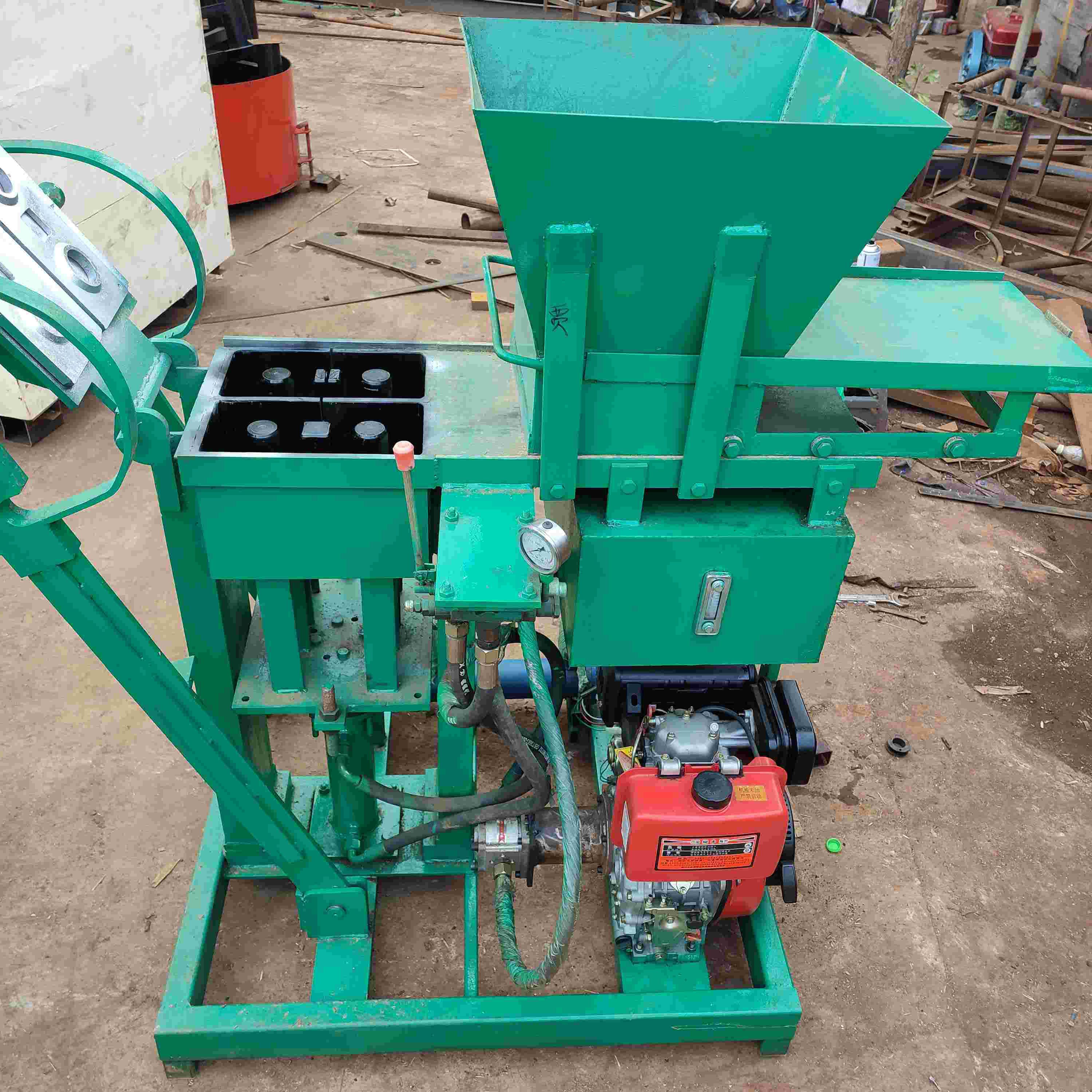
These are the workhorses of small-scale and entry-level production.
Ideal For: Entrepreneurs in rural areas with lower labor costs, DIY builders, or specialized artisanal brick production.
Pros: Very low initial investment, simple mechanical operation, easy to maintain with basic tools, low power consumption.
Cons: High labor intensity, lower output, inconsistent brick quality due to human variables, physical strain on operators.
These are integrated production systems where raw material enters one end, and finished, stacked bricks emerge from the other.
Ideal For: High-volume commercial production where consistency, efficiency, and labor savings are paramount.
System Breakdown: A true plant includes:
A feeder and mixer for consistent raw material blend.
A conveyor system.
The core brick molding machine (often a high-pressure press).
A brick stacking and palletizing system.
Often linked to automated curing systems.

This is the core technical differentiation in molding technology.
Extrusion Machines: These force prepared clay through a die to form a continuous column of clay, which is then wire-cut into individual bricks. Excellent for consistent, high-volume production of standard solid or perforated bricks.
Hydraulic/Mechanical Presses: These compact clay powder or moist clay into a mold under extremely high pressure. They are the preferred choice for:
High-density bricks and blocks with superior strength.
Producing a wide variety of shapes (hollow blocks, pavers, interlocks) by simply changing the mold.
Achieving precise dimensional tolerances.
When comparing models, move beyond glossy brochures and focus on these hard metrics.
Manufacturer Claims vs. Reality: A spec sheet may say “5,000 bricks per hour.” This is often a theoretical maximum under ideal conditions with perfect clay. Ask for the sustained, practical output over an 8-hour shift.
Key Determinants: Output is governed by cycle time (how long one press/extrusion cycle takes) and the number of mold cavities (how many bricks are made per cycle).
Hydraulic Pressure (Tonnage): This is a key indicator of brick quality for presses. Higher pressure (e.g., 150 tons vs. 50 tons) compacts the clay more, resulting in bricks with higher density, better edge strength, and lower water absorption. Match the pressure to your strength requirements.
Electrical Power: Note the voltage (e.g., 380V/50Hz) and total connected load (in kW). This affects your operating costs and site electrical infrastructure. A machine that needs a high-capacity three-phase connection is a different proposition than one that runs on standard single-phase power.
Mold Cost & Design: Molds are high-wear, critical components. Inquire about the cost and lead time for additional mold designs. A reputable supplier should offer CAD drawings for your approval before machining.
Changeover Time: If you plan to produce multiple products, how long does it take to change molds? Some modern machines allow for changeovers in under 30 minutes, while others may take half a day, directly impacting your operational flexibility.
The purchase price is just the first line item. The true cost is spread over the machine’s lifespan.
Upfront Costs: Purchase Price (FOB or CIF), International Shipping, Insurance, Customs Clearance/Duties, On-site Installation & Commissioning by a technician.
Ongoing Costs:
Energy: The electricity or diesel to run the machine and ancillary equipment.
Wear Parts: Budget for regular replacement of molds, extrusion augers, liners, hydraulic seals, and filters. Ask the supplier for a recommended spare parts list and their prices.
Maintenance Labor: The cost of skilled technicians for routine servicing.
This is where a good deal can turn into a terrible investment.
Assess Build Quality: Look at the thickness of steel frames, the brand of hydraulic pumps and PLC systems, and the quality of welding. These are proxies for durability.
The Non-Negotiable: After-Sales Support. The machine will need service. Crucially, you must confirm the availability of local or regional technical support, spare parts inventory, and the willingness to provide remote troubleshooting. A machine with no support is a very expensive paperweight. Always prioritize a supplier with a proven support network in your area over a slightly cheaper one with none.
Protect your investment by rigorously evaluating potential suppliers.
Business History: How long have they been manufacturing? Are they a trading company or an actual factory? Request factory photos and videos.
Client Portfolio & References: Ask for contact information for 2-3 clients in a similar climate or using similar clay. A trustworthy supplier will provide this.
Certifications: Look for relevant quality management (ISO) and machinery safety certifications.
Never buy a machine unseen. Insist on a Factory Acceptance Test (FAT).
Bring Your Clay: The ultimate test is to send a sample of your actual clay to the factory and witness a production trial. Observe:
Brick quality and surface finish.
Machine stability and noise level.
Ease of operation and safety features in use.
Key Performance Indicators: Note the actual cycle time, the consistency of brick weight and dimensions, and the percentage of defective bricks.
Warranty: A comprehensive warranty should cover defects in materials and workmanship for critical components (hydraulic system, main frame, electrical control) for at least 12 months. Understand what is excluded (wear parts like molds are often excluded or covered for a shorter period).
Payment Terms: Secure terms (e.g., 30% deposit, 70% against copy of Bill of Lading) are standard. Be wary of suppliers demanding 100% upfront.
Logistics & Incoterms: Clearly agree on who is responsible for shipping, insurance, and customs clearance (e.g., FOB, CIF, or DAP). Use a reputable freight forwarder.
Costs vary dramatically. A simple manual machine can start from $3,000 – $10,000. A semi-automatic system may range from $15,000 – $50,000. A fully automatic production line can range from $70,000 to over $500,000, depending on capacity and automation level. As this guide emphasizes, the “right” cost depends entirely on your specific needs.
Yes, through interchangeable molds. Most presses and some extruders are designed for this. However, there are limits to adaptability—a machine designed for small solid bricks may not have the platen size or pressure profile to optimally produce large hollow blocks. Always confirm the machine’s range with the supplier.
Space planning is critical. You need area for:
1. The Machine & Production Line: A medium automatic line may need a 20m x 10m covered shed.
2. Raw Material Storage: For cured clay and additives.
3. Drying Yard: The largest area—often 5-10x the footprint of your daily production for sun-drying.
4. Foundation: Heavy machines require a reinforced concrete foundation, often 300-500mm thick, specified by the manufacturer.
For a standard machine, expect 3-6 months from order to commissioning:
* Manufacturing: 30-60 days.
* Shipping & Customs: 30-90 days, depending on destination.
* Installation & Training: 7-14 days on site. Custom or large plants take longer.
Absolutely. Prioritize machines with:
* Emergency Stop Buttons at multiple access points.
* Physical Guards on all moving parts (gears, conveyors, press rams).
* Safety Interlocks that prevent operation if guards are open or if there is a hydraulic fault.
* Clear safety signage and instructions in your language.
Choosing the right clay brick making machine is a journey that begins with introspection, moves through technical evaluation, and culminates in diligent supplier vetting. Remember, the cheapest upfront option is frequently the most expensive over its lifetime when you account for downtime, poor quality, and lack of support.
Your local clay and your specific market demands are unique. Therefore, while this guide provides the framework, personalized advice is invaluable. We strongly recommend consulting with experienced industry engineers or equipment experts who can analyze your clay sample and project goals to recommend the most suitable, cost-effective solution for your long-term success. Making an informed choice today lays the strongest possible foundation for your brick production tomorrow.

